
- Technology
- AI
"The Architecture Follows the Workload. Not the Partnership."
The EU is deciding on sovereignty – but the blockage is happening at the use-case level.
Read more
Conversational analytics makes data accessible through natural language and is therefore a useful entry point into AI-supported analysis. In public administration, however, a simple “question in, answer out” principle is rarely sufficient: decisions emerge along formal processes, responsibilities, and documentation requirements. The greater leverage therefore lies not in the interface, but in an architecture that systematically ensures context, data quality, semantics, and logging. In this way, AI evolves from a tool into an infrastructural capability — and can gradually and measurably improve administrative processes.
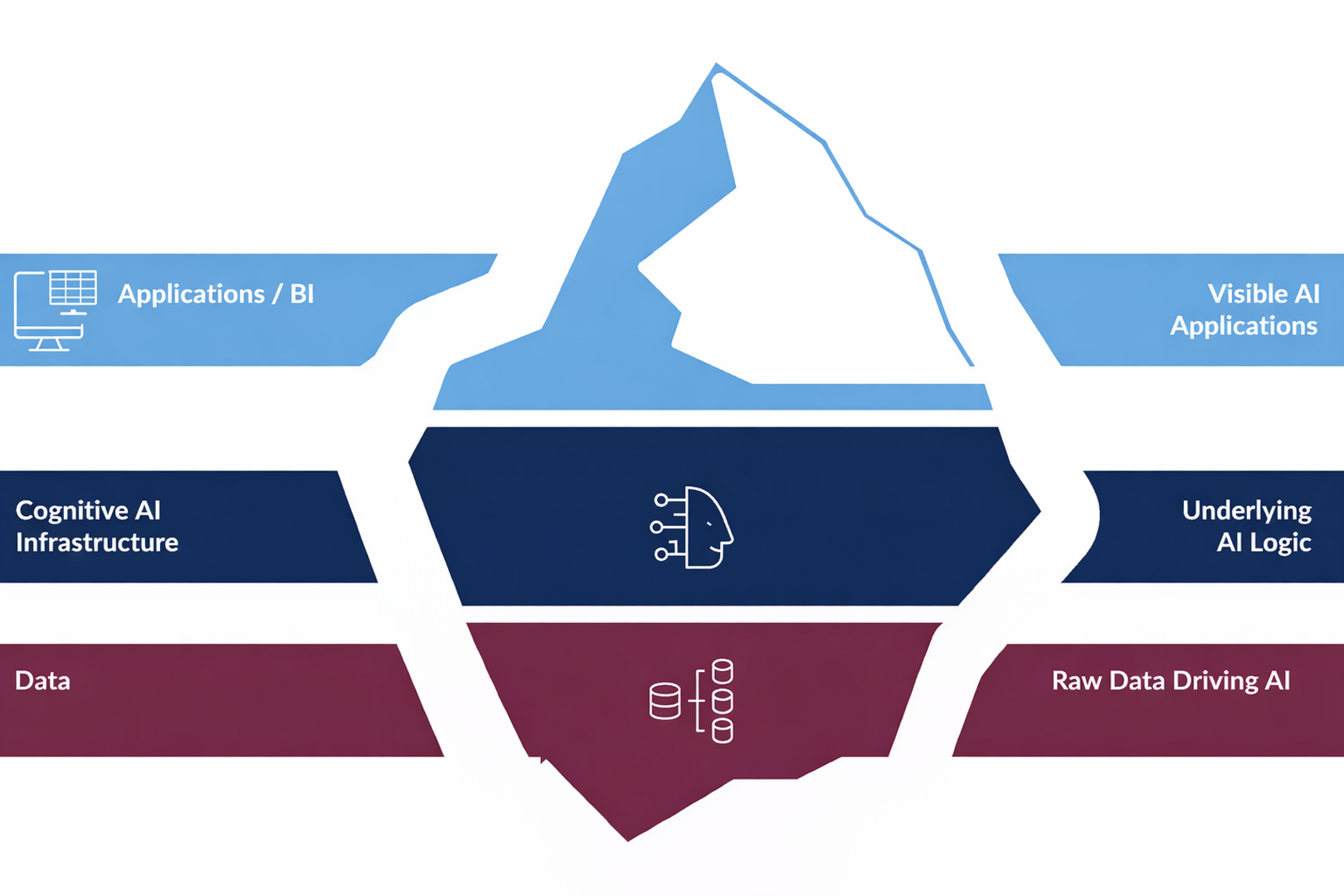
Many debates about artificial intelligence in the public sector start with simple, dialog-based access to data. Such AI-supported analytical interfaces are low-threshold, intuitive, and easy to explain. A question goes in, an answer comes out — AI feels tangible.

But this picture falls short: conversational analytics — that is, dialog-based access to analysis — is not a goal, but a transition. It lowers barriers to entry, accelerates information flows, and makes data usable for more people. At the same time, it easily creates the impression that AI mainly consists of individual queries and individual answers.
Administrative action, however, follows a different logic. It is shaped by formal processes, case files, deadlines, responsibilities, and legal requirements. Decisions emerge along clearly defined procedures, often over longer periods of time, involving multiple actors and with a high degree of binding force. A purely dialog-based interface reflects this reality only to a limited extent.
This is where the limitation of purely interface-driven solutions becomes apparent.
The decisive step forward does not concern the interface, but the underlying structure. AI unfolds its value where it condenses information, establishes connections, and prepares decisions in a process-ready way — meaning in a form that fits into existing workflows, roles, and documentation requirements.
What is meant are systems that can process large amounts of context:
analyze case files and proceedings,
consolidate facts,
make dependencies and risks visible,
provide decision-relevant information in a structured way — including sources, status, and responsibilities.
In this way, AI does not merely improve systems — it transforms work steps: what previously had to be manually searched for, compared, coordinated, and documented becomes decision-ready much faster — without bypassing the rules of public administration.
A short comparison makes the leap tangible:
Conversational analytics (dialog-based):
“How did spending in program X develop over the last quarter?”
Answer: figures, trend, possibly a brief explanation.
Decision assistance (cognitive/systemic):
“There is a deviation in program X. It affects cost center Y, is linked to case Z, and falls under responsibility A. Three plausible causes, two courses of action — including justification, references to relevant documents, and logging of the reasoning.”
Result: not just information, but a decision-ready structure.
The dialog-based interface remains useful — but the real value is created at the system level.
Technology in the public sector is subject to special requirements. Equal treatment, transparency, legal certainty, and reproducibility are not optional — they are core principles. Modern AI models operate probabilistically. Identical inputs can lead to different outputs. In regulated contexts, this requires explanation and justification.
Reliability therefore does not come from the model, but from the architecture: clear decision logics, versioned data products, defined semantics, documented processes, and auditable chains of reasoning. AI complements these structures by organizing information, making patterns visible, and preparing decision processes.
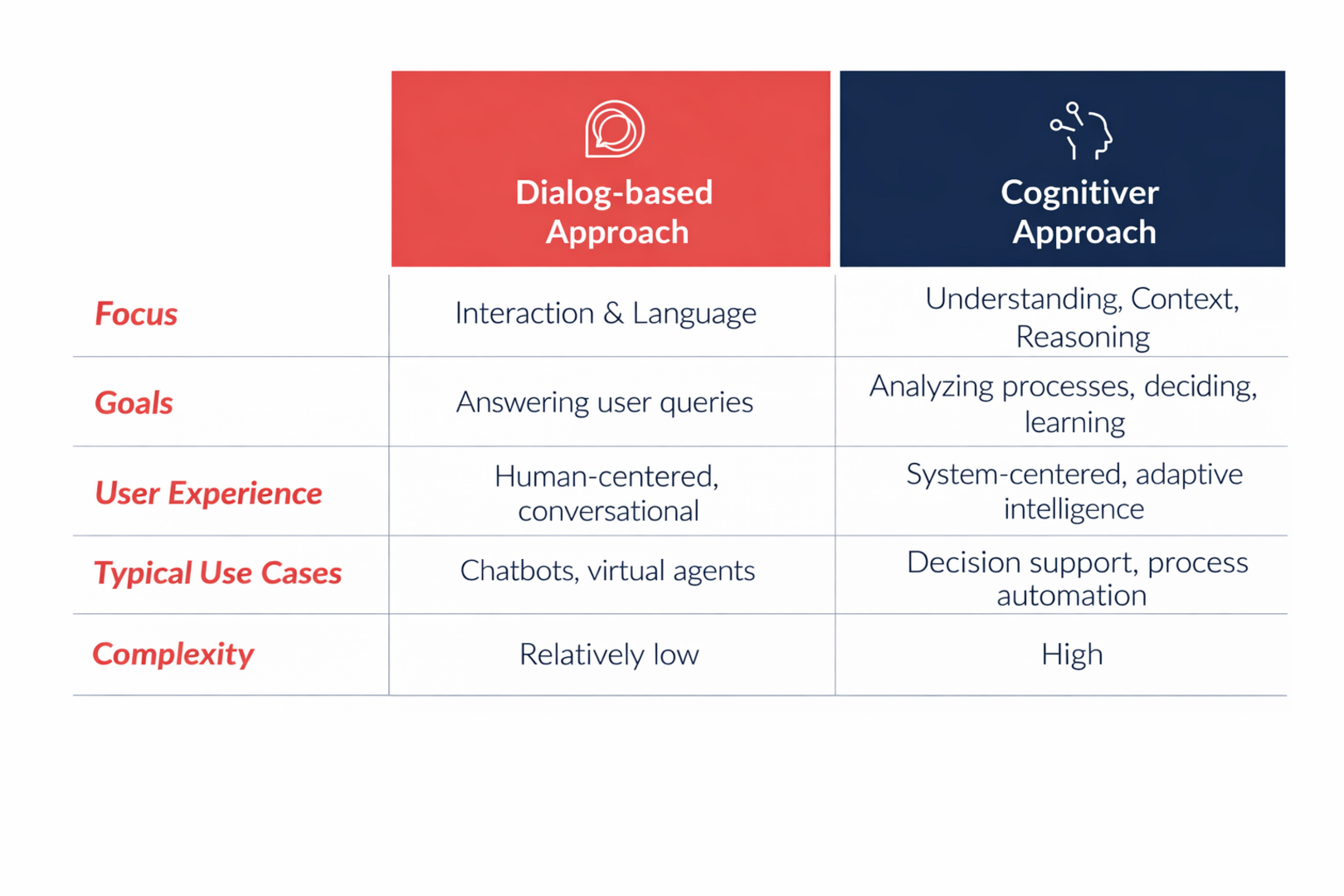
This shifts the central design question:
less: “Where do we deploy a chatbot?”
more important: “How do we embed AI as a lasting system capability?”
A cognitive system layer coordinates the use of AI across different use cases. It provides context, safeguards data quality, logs steps, and prevents isolated point solutions with high risk and low scalability.
AI thus becomes part of the organizational infrastructure: a layer that not only makes information available, but structures it, situates it, and prepares it in a decision-relevant way — integrated into existing systems.
Many organizations already have mature analytics environments: data models, dashboards, permission structures, and governance processes have evolved over years. This foundation is valuable — and should not be bypassed by new standalone solutions.
Instead, AI can be integrated step by step into existing analytics platforms: the dialog-based access leverages validated data models, approved content, and established access logic. Role models and governance remain unchanged; data stays in the system.
That is why we deliberately speak less about “chat” and more about analytics: not conversation as an end in itself, but structured, system-integrated decision support.
AI in the public sector does not need activism. It needs trust, structure, and a realistic entry point.
Conversational analytics shows how AI can already be used today as an extension of existing analytics environments — safe, integrated, and built on what is already in place. At the same time, the approach opens the door to the next question: how AI can be embedded as a lasting system capability in architectures and processes.
Not as a one-time leap.
But step by step by step — consistently.
The EU is deciding on sovereignty – but the blockage is happening at the use-case level.
Read more
An accolade you can't simply buy.
Read more
AI needs systems, not just smart chatbots
Read more

Security, Sovereignty, and the Responsibility of Organizations
Read more![[Translate to English:]](/fileadmin/_processed_/6/7/csm_Vendor-Lock-In_f32d70f42f.png "[Translate to English:]")
![[Translate to English:]](/fileadmin/_processed_/a/9/csm_Lift-and-Shift_befc1ac711.png "[Translate to English:]")
How to make your cloud migration future-proof
Read more
Progress for data-driven innovation
Read more
Advantages and migration options with M2
Read more
How to migrate your data from different systems to Tableau Cloud
Read more